Getting Things Done by David Allen – Summary & Key Ideas

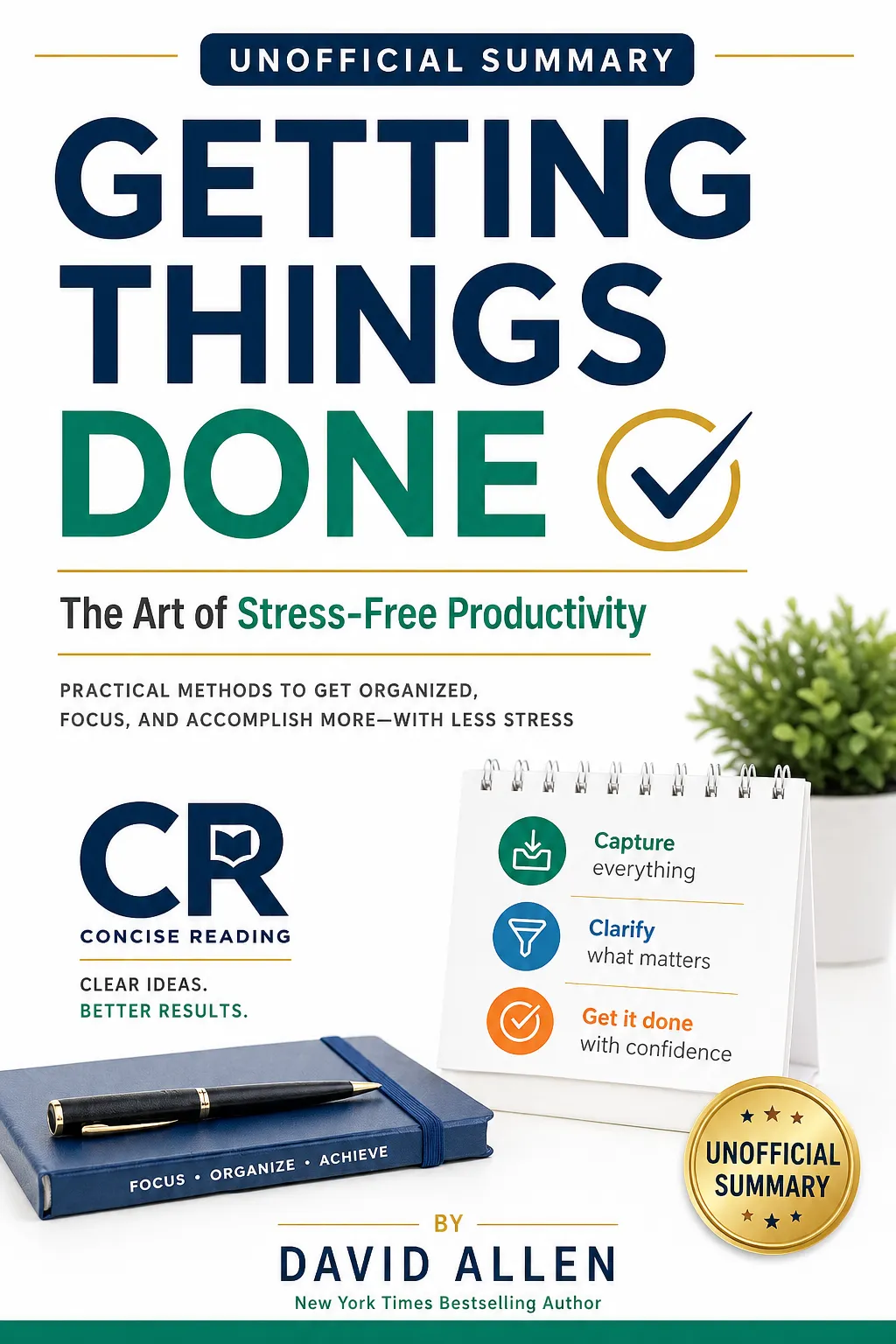
Getting Things Done by David Allen book summary cover for Concise Reading

Struggling with endless tasks, cluttered to-do lists, and constant stress about unfinished work? This powerful productivity system will help you organize your work, clear your mind, and focus on what truly matters.

This page from Concise Reading presents a simplified and actionable breakdown of one of the world’s most influential productivity books.

Getting Things Done

You can also explore more productivity and business book summaries in our Free Summaries page or browse our entire collection inside the Library.

Introduction

Getting Things Done by David Allen is one of the most influential productivity books ever written. The book introduces the famous GTD (Getting Things Done) methodology, a powerful system designed to help individuals manage tasks, projects, and commitments efficiently.

In today’s fast-paced world, professionals constantly deal with emails, meetings, deadlines, and responsibilities. Many people feel overwhelmed because their tasks remain scattered across notebooks, emails, apps, and memory.

David Allen’s approach solves this problem by introducing a structured workflow system that allows you to capture, organize, and execute tasks without stress.

Instead of trying to remember everything, GTD teaches you to build a trusted productivity system outside your brain. Once your tasks are captured and organized properly, your mind becomes free to focus on meaningful work.

This is why Getting Things Done has become a must-read for entrepreneurs, managers, freelancers, and students.

If you enjoy productivity books like The 7 Habits of Highly Effective People, Atomic Habits, or The 4-Hour Workweek, then the GTD framework will perfectly complement those strategies.

At Concise Reading, we condensed the most valuable insights from the book into a clear and actionable PDF summary so you can learn the system quickly without reading the entire book.

You can explore more summaries like this inside our Free Summaries collection, or check curated bundles like the Personal Effectiveness & Human Skills Pack available in our Premium Packs section.

About the Author

David Allen is an internationally recognized productivity consultant, speaker, and author. He is best known for creating the Getting Things Done (GTD) productivity system used by professionals and organizations worldwide.

For decades, Allen studied how people manage commitments, tasks, and information. His research led him to develop a practical framework that helps individuals achieve stress-free productivity.

His GTD methodology has been adopted by executives, entrepreneurs, creative professionals, and knowledge workers across industries.

David Allen has also written several other influential productivity books, including:

  • Making It All Work
  • Ready for Anything
  • Getting Things Done for Teens

Through his seminars, consulting work, and training programs, Allen has helped organizations improve workflow, efficiency, and decision-making.

His ideas complement many other productivity and business books available in our Free Summaries library, including Drive, Flow, and Measure What Matters.

To learn more about the author, you can visit the official Getting Things Done website or explore David Allen’s professional work online.

Key Takeaways

Here are the most important lessons from Getting Things Done:

  • Your brain is designed for having ideas, not storing them.
  • Capturing tasks into a trusted system reduces stress and improves focus.
  • Every project becomes easier when you define the next physical action.
  • Breaking complex goals into smaller tasks increases productivity.
  • Regular reviews keep your task management system reliable.
  • Context-based task lists help you work more efficiently.
  • Mental clarity improves decision-making and creativity.

These principles form the foundation of the GTD methodology and are explained in detail inside the downloadable summary.

Key Ideas

The central philosophy of the GTD method is simple:

Mental clarity leads to productivity.

When your mind is filled with unfinished tasks, it constantly reminds you about them. This creates stress and distraction.

David Allen introduces a simple workflow consisting of five key stages.

Capture Everything

The first step is to capture every idea, task, responsibility, and commitment outside your brain.

Examples include:

  • Work tasks
  • Personal responsibilities
  • Business ideas
  • Long-term goals
  • Projects

Once everything is captured in a trusted system, your brain becomes free to focus on execution rather than remembering.

Clarify Tasks

After capturing tasks, you must decide what each item means.

Ask yourself:

  • Is this actionable?
  • What is the next step?

This simple decision-making process prevents confusion and procrastination.

Organize Information

Once tasks are clarified, they must be placed into appropriate categories such as:

  • Next Actions
  • Projects
  • Waiting For
  • Calendar
  • Reference Material

Organization ensures that tasks appear at the right time.

Review Your System

The GTD system only works when you review it regularly.

David Allen recommends performing a weekly review to keep your lists accurate and up to date.

Focus on the Next Action

One of the most powerful ideas in the book is defining the next physical step for any project.

For example:

Instead of writing:
“Start a business”

You write:
“Research business ideas.”

Clarity removes resistance and encourages action.

Detailed Lessons

Lesson 1: Your Brain Is Not a Storage Device

Many people try to remember dozens of tasks at once. This creates mental stress and reduces productivity.

When your mind holds unfinished tasks, it constantly reminds you about them.

David Allen explains that the brain is excellent at generating ideas but terrible at storing reminders.

The solution is to capture everything into a reliable system such as:

  • A notebook
  • A productivity app
  • A task manager

Once tasks are written down, your brain can relax.

This idea complements the productivity philosophy explained in Atomic Habits, where systems are emphasized over motivation.

Lesson 2: Define the Next Action

One major cause of procrastination is vague tasks.

For example:

“Improve marketing strategy.”

This is unclear.

Instead, define the next action:

“Analyze competitors’ marketing strategies.”

This small change makes tasks easier to start.

This principle also appears in business execution frameworks such as Execution and Measure What Matters, both available inside our Free Summaries collection.

Lesson 3: Projects Require Multiple Steps

Any outcome requiring more than one step is considered a project in GTD.

Examples include:

  • Launching a startup
  • Writing a report
  • Creating a marketing campaign

Many people mistakenly treat projects as single tasks.

Instead, you should:

  1. Define the project outcome
  2. List the required steps
  3. Identify the next action

Breaking large goals into smaller actions prevents overwhelm.

This idea is also reinforced in entrepreneurship books like The Lean Startup and Zero to One.

Lesson 4: Context-Based Task Lists

Traditional to-do lists mix different tasks together.

The GTD system organizes tasks based on context, such as:

  • Tasks requiring a computer
  • Phone calls
  • Errands
  • Meetings

This makes decision-making faster and more efficient.

Lesson 5: Weekly Reviews Keep Everything Working

The weekly review is one of the most important habits in the GTD system.

During this review you should:

  • Check all projects
  • Update task lists
  • Clear inboxes
  • Plan upcoming tasks

Without regular reviews, your productivity system will become outdated.

Key Quotes

Here are some memorable insights from the book:

“Your mind is for having ideas, not holding them.”

“You can do anything, but not everything.”

“Much of the stress people feel comes from not finishing what they started.”

“The real work of knowledge work is defining what the work is.”

“When the next action is clear, progress becomes easy.”

Practical Takeaways

You can start applying the GTD method immediately using these steps:

  1. Write down every task currently in your mind.
  2. Create a trusted productivity system.
  3. Define the next action for every project.
  4. Organize tasks into categories.
  5. Conduct a weekly productivity review.

These strategies can dramatically improve your focus and efficiency.

You can also combine them with insights from other productivity classics available on our Free Summaries page, such as, Flow and Drive.

Who This Summary Is For

This summary is ideal for:

  • Entrepreneurs managing multiple responsibilities
  • Professionals overwhelmed with tasks
  • Students seeking better time management
  • Freelancers working with multiple clients
  • Anyone interested in productivity and personal development

If you’re building a business or managing complex projects, this summary will provide a powerful system to stay organized.

What’s Included in the PDF

When you download this FREE Concise Reading summary, you’ll get:

  • A simplified explanation of the GTD productivity system
  • Key concepts explained in an easy-to-understand format
  • Practical strategies you can apply immediately
  • Personal analysis and insights from Concise Reading
  • A fast-reading format designed for busy professionals
Getting Things Done

You can also explore premium collections like:

available in the Premium Packs section.

Content Preview

Inside the summary you’ll discover:

  • The complete GTD workflow explained step-by-step
  • Methods to organize tasks and projects effectively
  • Productivity strategies used by successful professionals
  • The weekly review system for long-term success
  • Practical frameworks for managing responsibilities

You can also explore similar productivity insights in summaries like Atomic Habits, The 7 Habits of Highly Effective People, and The Lean Startup available on our website.

Final Thoughts

Getting Things Done by David Allen remains one of the most powerful productivity frameworks ever developed.

Its core principle is simple:

When your mind is clear, your productivity improves dramatically.

By capturing tasks, organizing commitments, and focusing on the next action, you can eliminate overwhelm and work more effectively.

Millions of professionals around the world use the GTD method to manage their responsibilities and achieve better results.

This Concise Reading summary condenses the most valuable insights from the book so you can understand and apply them quickly.

If you enjoy learning from business and productivity books, explore more summaries in our Free Summaries library or browse curated collections in Premium Packs.

Download Your Free Summary

Take control of your productivity and eliminate mental clutter today.

Getting Things Done

You can also discover new insights every month in our New Releases and Best Sellers collections.

Disclaimer: This summary is an independent educational resource and is not affiliated with the author or publisher.

4 Comments

Leave a Reply

Your email address will not be published. Required fields are marked *