The Financial Intelligence Mastery Pack — 12 Deep Summaries That Teach You to Read Money Like a Pro
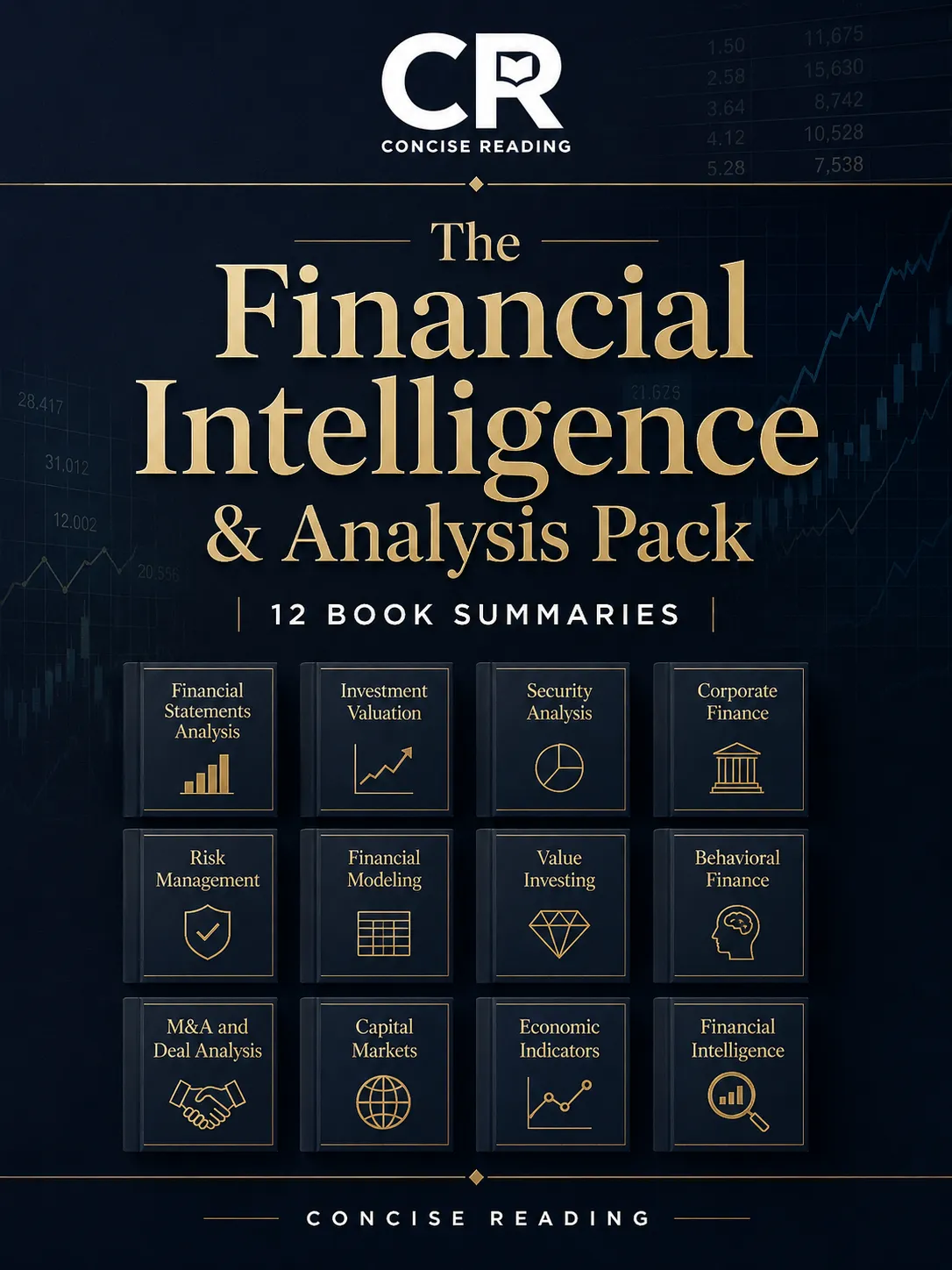
Get the complete financial education from Warren Buffett’s accounting principles to Piketty’s capital theory — 12 essential books condensed into clear, actionable summaries for under $30.
| 12 Deep Summaries | $ 2.4 per Summary |
$ 60
Instant download. PDF format. Use on any device.
The Problem This Pack Solves
Most people who want to become financially intelligent don’t lack motivation — they lack a structured starting point. You pick up Financial Statements, get three chapters deep, and hit a wall of jargon. You buy Corporate Finance, and it reads like a textbook written for someone who already has an MBA. You know this knowledge matters. You’ve seen what happens to investors, entrepreneurs, and business owners who understand numbers — and what happens to those who don’t. But reading 12 dense finance books back-to-back, totalling over 4,000 pages, while running a business or holding a full-time job, is not a realistic plan.
The result? You keep skipping to “more accessible” content. You pick up high-level ideas without the frameworks to apply them. You stay permanently one step behind the people in the room who actually understand the numbers.
This pack gives you the complete financial intelligence education — every key idea, framework, and action step — without the 4,000 pages.
What’s Inside — Full Book List
This pack is not a random collection of finance books. Every title was selected because it fills a specific gap in a complete financial education — from reading a balance sheet for the first time to understanding how irrationality moves markets. Here is exactly what you get, and why each book belongs here:
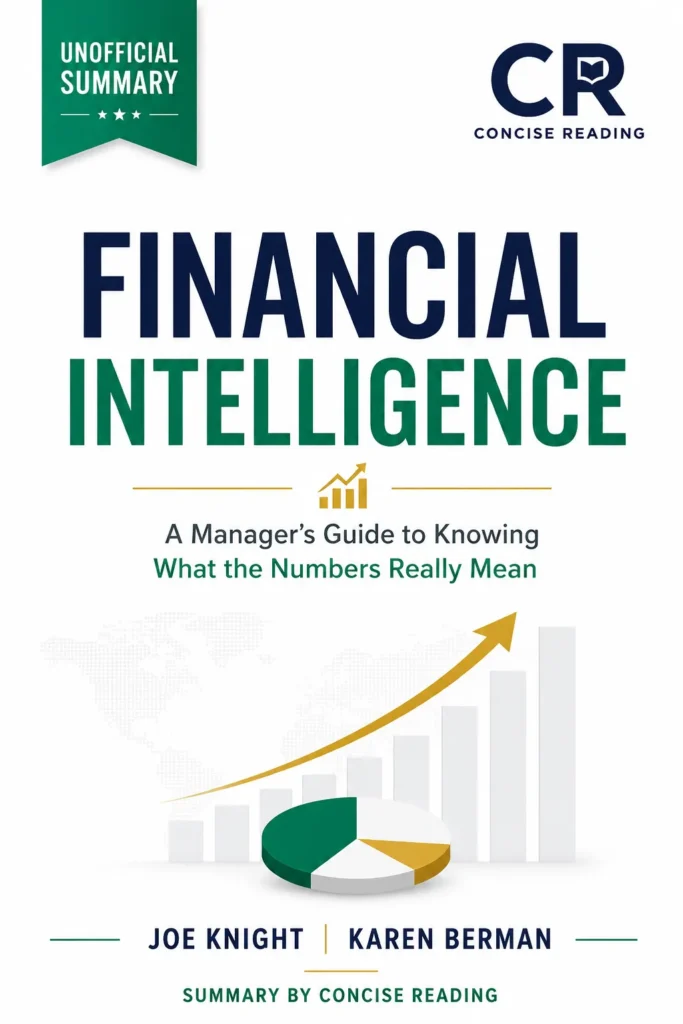
- Financial Intelligence — Karen Berman & Joe Knight
- Why it’s included: The best first book for non-finance professionals. It demystifies how financial statements actually work and why the numbers are never as objective as they look.
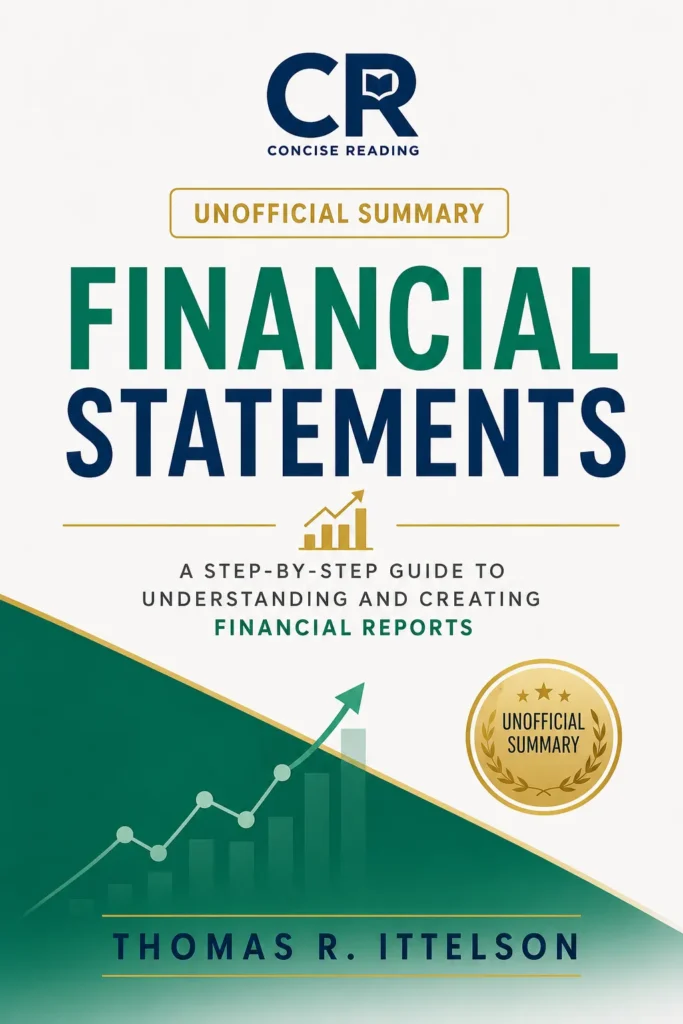
- Financial Statements — Thomas Ittelson
- Why it’s included: A visual, step-by-step walkthrough of the income statement, balance sheet, and cash flow statement. Builds the foundational literacy every other book in this pack assumes you have.
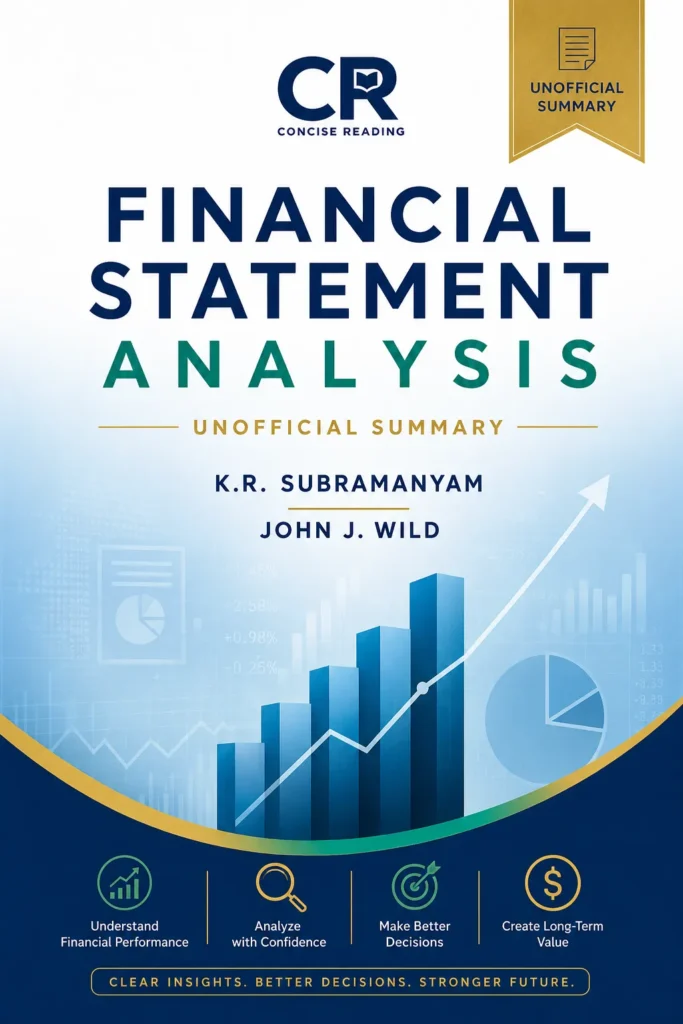
- Financial Statement Analysis — K.R. Subramanyam, John J. Wild
- Why it’s included: Moves you from reading financial statements to interpreting them. Teaches you to spot red flags, evaluate company health, and make judgments that numbers alone don’t reveal.
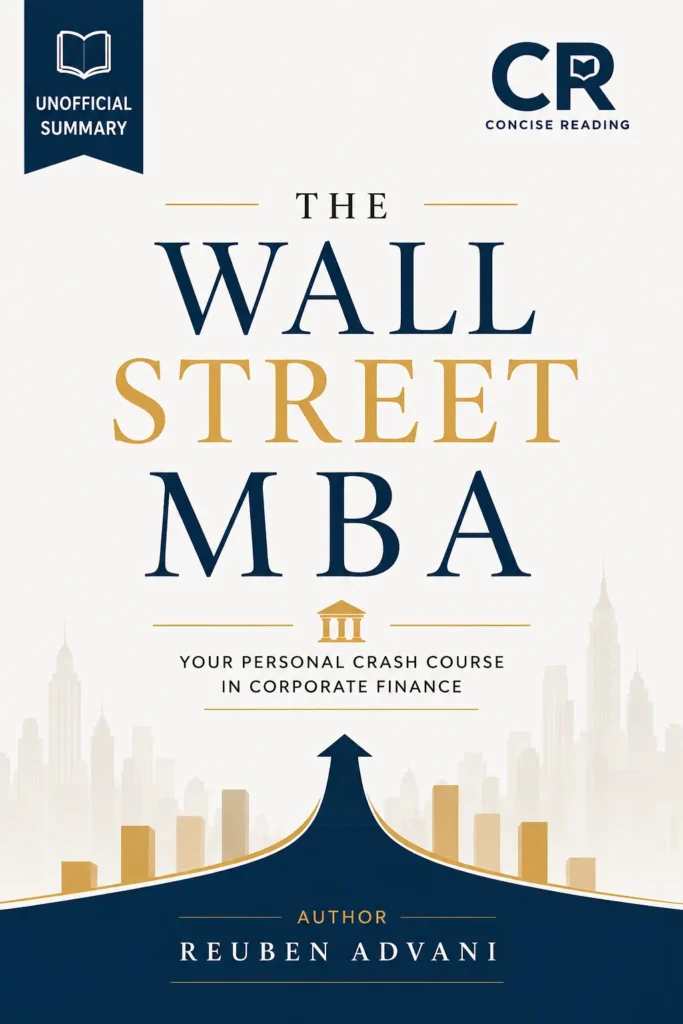
- The Wall Street MBA — Reuben Advani
- Why it’s included: Condenses an MBA-level finance curriculum into practical frameworks. Covers valuation, capital structure, and deal mechanics without the two-year degree.
- Warren Buffett Accounting Book — Stig Brodersen & Preston Pysh
- Why it’s included: Shows how the world’s greatest investor reads financial statements — specifically what he looks for, what he ignores, and what automatically disqualifies a company.
- Corporate Finance — Stephen A. Ross, Randolph W. Westerfield, Jeffrey Jaffe
- Why it’s included: The authoritative reference on how companies raise capital, allocate resources, and create long-term value. Essential for anyone making or evaluating business decisions at scale.
- Financial Shenanigans — Howard Schilit
- Why it’s included: The book that teaches you to detect accounting manipulation. After reading this, you will never look at a reported earnings figure the same way again.
- The Goal — Eliyahu M. Goldratt
- Why it’s included: A novel that teaches operational thinking and the Theory of Constraints — how businesses identify and eliminate the single bottleneck preventing profitability.
- Profit First — Mike Michalowicz
- Why it’s included: A behavioural cash management system that flips traditional accounting logic. Practically useful for every entrepreneur who has watched revenue grow while cash disappears.
- Rich Dad’s Guide to Investing — Robert Kiyosaki
- Why it’s included: Reframes investing from a wealth-building perspective rather than a technical one. Teaches asset classification, passive income structuring, and long-term financial positioning.
- Capital in the Twenty-First Century — Thomas Piketty
- Why it’s included: The macro lens. Provides an evidence-based understanding of how wealth concentrates over time — critical context for anyone building a long-term financial strategy.
- Irrational Exuberance — Robert J. Shiller
- Why it’s included: Explains why markets overshoot, crash, and behave irrationally — and how to protect your thinking and your portfolio from the psychological traps that catch most investors.
Suggested Reading Order
Not all starting points are equal. Here is the sequence that builds your financial intelligence in the most logical progression — each book unlocks the next:
Start with Financial Statements (Ittelson) to build the foundational vocabulary. Move to Financial Intelligence (Berman & Knight) to understand why those numbers are judgment calls, not facts. Then read Financial Statement Analysis (Fridson) to start interpreting what you can now read. Follow that with Warren Buffett Accounting Book to see how a master investor applies these skills in practice. Next, work through The Wall Street MBA (Advani) for the broader corporate finance framework, then Corporate Finance (Vernimmen) for depth. At this point, read Financial Shenanigans (Schilit) — you now have enough literacy to understand exactly what manipulations to look for. Shift to Profit First (Michalowicz) and The Goal (Goldratt) for operational and cash flow intelligence. Then read Rich Dad’s Guide to Investing (Kiyosaki) for strategic positioning. Close with Capital in the Twenty-First Century (Piketty) and Irrational Exuberance (Shiller) to understand the macro forces shaping every financial decision you’ll ever make.
This sequence transforms 12 separate books into one coherent education.
What Each Summary Includes
For every summary in this pack, the reader gets:
- Book snapshot & author background
- Full chapter-by-chapter breakdown
- Key frameworks with visual diagrams
- specific action steps
- Critical honest analysis
- One-page cheat sheet
- Further reading recommendations
What You’ll Be Able To Do After This Pack
- This is not a list of topics covered. These are the specific capabilities you will have after working through this pack:
- Read any company’s financial statements — income statement, balance sheet, and cash flow — and identify whether the business is healthy, deteriorating, or dressing up its numbers to look better than it is.
- Spot accounting manipulation before it costs you money. Apply Howard Schilit’s red-flag framework from Financial Shenanigans to any financial report you evaluate as an investor, lender, or executive.
- Evaluate a business the way Warren Buffett does — using specific accounting ratios, return metrics, and qualitative filters taught in the Warren Buffett Accounting Book to separate genuinely strong businesses from ones with the appearance of strength.
- Manage your business cash flow with a system, not a feeling. Implement the Profit First methodology to ensure profitability is built into your financial architecture — not hoped for at the end of the month.
- Have an intelligent, informed view of markets and valuations. Understand why markets become irrational (Shiller), why wealth concentrates at the macro level (Piketty), and how to protect your own financial decisions from both forces.
- Communicate in financial terms at any boardroom, investment meeting, or bank conversation — using the frameworks from The Wall Street MBA and Corporate Finance to speak the language of money with authority.
- Identify the single constraint bottlenecking your business profitability and apply Goldratt’s Theory of Constraints to systematically eliminate it.
Summaries vs Reading the Original Books
The original books in this pack are brilliant. Every author here is a genuine authority. This pack does not replace them — it extracts everything that matters and shows you exactly what to do with it.
Reading all 12 original books vs. This Pack:
- Time investment: Reading all 12 originals — approximately 5 to 7 months of consistent reading (4,000+ pages combined). This pack — 10 to 15 hours across all 12 summaries.
- Cost: Buying all 12 original books — $180 to $240 in print or digital editions. This pack — $29.
- What you get: Original books — comprehensive depth, often padded with academic detail and repetition. This pack — every core framework, key model, and action step, with the context you need to apply it immediately.
- Retention: Original books — most readers retain 10 to 20 percent after three months without structured review. This pack — structured chapter-by-chapter breakdowns with key takeaways you can return to as reference sheets before any financial conversation, investment decision, or business review.
- Starting point: Original books — assumes prior context; many readers stall in the first third. This pack — built for the reader who wants a complete, progressive education with zero assumed background.
The question is not whether these books are worth reading. They are. The question is whether you have 5 months and $200 available right now — or whether you want the complete education today for $29.
Who This Pack is For ?
This pack was built for a specific reader. Check whether that is you:
You are an entrepreneur or small business owner who knows that understanding your own financial statements should be non-negotiable — but every time you sit down with your bookkeeper or accountant, you feel like you are nodding along to a language you do not actually speak.
You are an investor — early or experienced — who wants to go beyond stock tips and develop the analytical toolkit to evaluate companies yourself, the way serious investors do, using the same frameworks that Warren Buffett has described in his own writing.
You are a professional in a non-finance role — a marketer, operations manager, consultant, or team lead — who keeps running into financial conversations you cannot fully contribute to, and who knows that financial literacy is the single skill that separates competent professionals from indispensable ones.
You are a student or recent graduate entering business, finance, or entrepreneurship who wants the condensed version of what a finance-track MBA actually teaches — before committing years and tens of thousands of dollars to a formal degree.
You are simply someone who takes money seriously. You have read one or two personal finance books, you have a savings plan, and you are ready to move from basic financial literacy to genuine financial intelligence — understanding not just how to save and invest, but how money actually works inside businesses, markets, and economies.
If any of these descriptions made you think “that is exactly me,” this pack was made for you. If you are looking for something more introductory, start with the free summaries in the Financial Intelligence & Analysis category and come back when you are ready to go deeper.
Testimonials
This pack is new, and the first readers are working through it right now.
If you have read this pack — or even one summary from it — your honest experience matters here. What clicked for you? What did you apply? What would you tell someone who is on the fence? Drop your thoughts in the comments below. Every genuine piece of feedback helps the next reader decide whether this is right for them, and it helps us make future packs better. There are no incentives here — just a space for honest, specific reactions from people who have actually done the reading.
FAQs
- Q: What format is this? → PDF, readable on any device, instantly downloadable.
- Q: How long are the summaries? → 25–35 pages each with full frameworks and cheat sheets.
- Q: Is this the same as Blinkist? → No. Blinkist gives 8-page overviews. These are 25+ page actionable deep-dives with frameworks, critiques, and cheat sheets.
- Q: Do I need to have read the books? → No. Each summary is completely standalone.
- Q: What if I already own some of these books? → You still get the frameworks, cheat sheets, and action steps for every book — including the ones you’ve read. Most buyers say they got more from the summary than the original.
12 deep summaries. $29 total. That is $2.42 per book — less than a single espresso for a complete education in financial intelligence, statement analysis, corporate finance, and investment thinking. Each individual premium summary at Concise Reading is priced at $4.99. Twelve of them would cost you $59.88. This pack gives you all twelve for $29 — a saving of over $30, with the added benefit of a curated reading order and a pack designed to function as one coherent course rather than twelve disconnected reads.
Want more than summaries? The Financial Intelligence Playbook synthesises these books into one complete, structured system — one document, one flow, one actionable framework for reading numbers, evaluating businesses, and making smarter financial decisions. It is the next step for the reader who wants synthesis, not just summaries.