The Investing Fundamentals Mastery Pack — 12 Deep Summaries in One Bundle
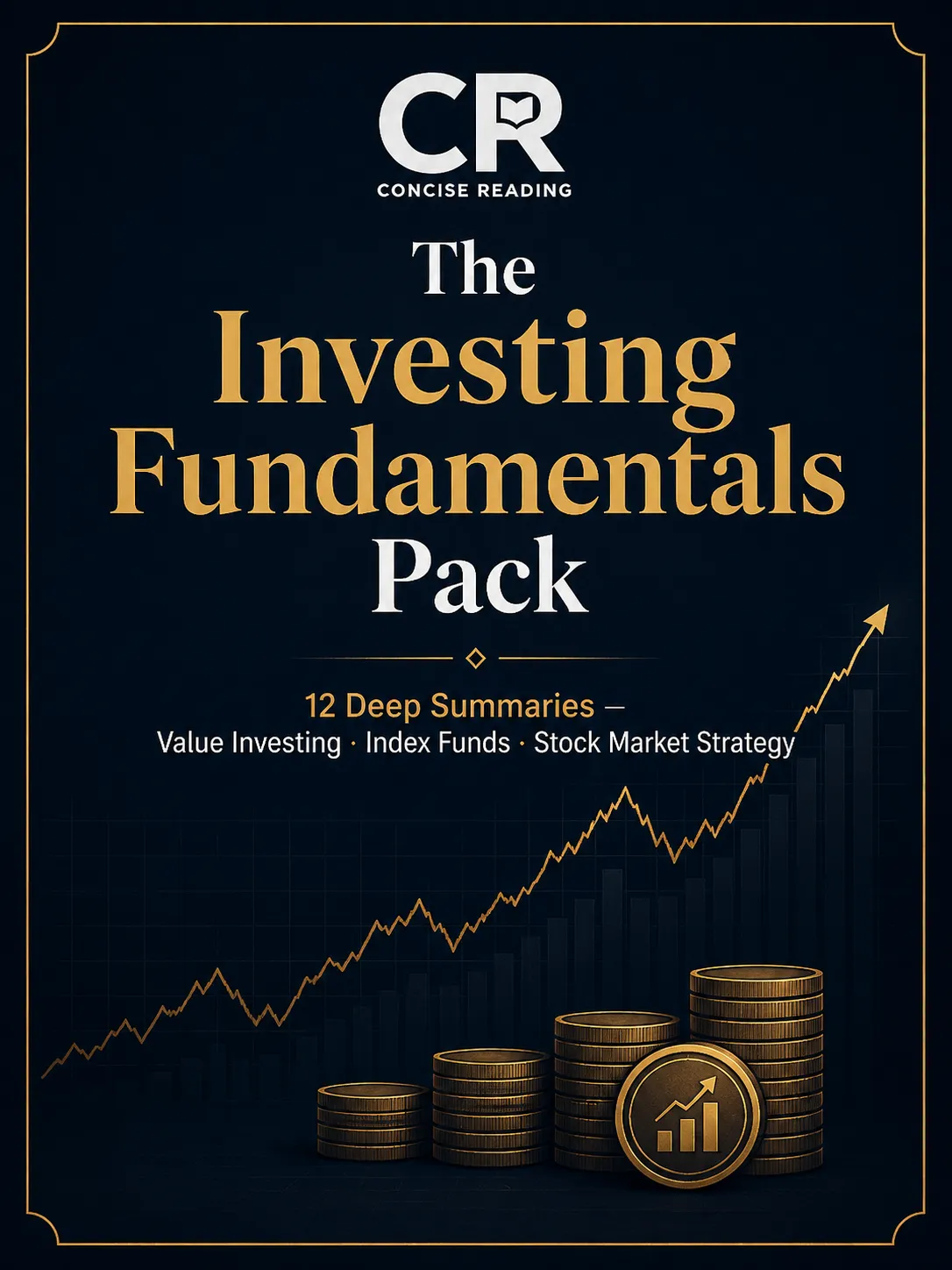
Get the complete investing education — from Graham’s margin of safety to Bogle’s index philosophy to Lynch’s stock-picking system — condensed into 12 structured summaries you can read, apply, and return to.
| 12 Deep Summaries | $ 2.4 per Summary |
$ 60
Instant download. PDF format. Use on any device.
The Problem This Pack Solves
Every serious investor eventually builds the same reading list. The Intelligent Investor. The Psychology of Money. One Up on Wall Street. The Bogleheads. Warren Buffett’s letters. The problem is not that these books are hard to find — it’s that reading all twelve of them, cover to cover, at the depth they deserve, takes months. And most people who buy them read one, start a second, abandon a third, and end up with half-formed ideas from five different investing philosophies that quietly contradict each other.
The result? You know of value investing but you can’t explain it. You’ve heard of index funds but you’re not sure when they beat active picking. You’ve read quotes from Buffett but you don’t have his actual decision-making framework. You’re informed enough to feel confident but not educated enough to act.
This pack gives you the complete investing fundamentals education — every key idea, framework, and mental model from twelve of the most important investing books ever written — without the 5,000 pages.
What’s Inside — Full Book List
Each summary is a structured, chapter-by-chapter breakdown of 15–25 pages. Here is every book included, why it belongs here, and the reading order that extracts maximum value.
- The Intelligent Investor — Benjamin Graham
- Why it’s here: The foundation everything else is built on. Graham’s margin of safety and Mr. Market concepts are the bedrock of rational investing. Read this first.
- The Psychology of Money — Morgan Housel
- Why it’s here: Before strategy comes behaviour. Housel explains why smart people make terrible financial decisions — and how to stop. Read this second to protect your mindset before building your method.
- A Random Walk Down Wall Street — Burton Malkiel
- Why it’s here: The most rigorous case for why most active stock-picking underperforms the index. Essential counterweight to Lynch and Fisher. Challenges your assumptions productively.
- The Little Book of Common Sense Investing — John C. Bogle
- Why it’s here: The definitive case for low-cost index investing, written by the man who invented the index fund. Pairs directly with Malkiel to build your passive investing conviction.
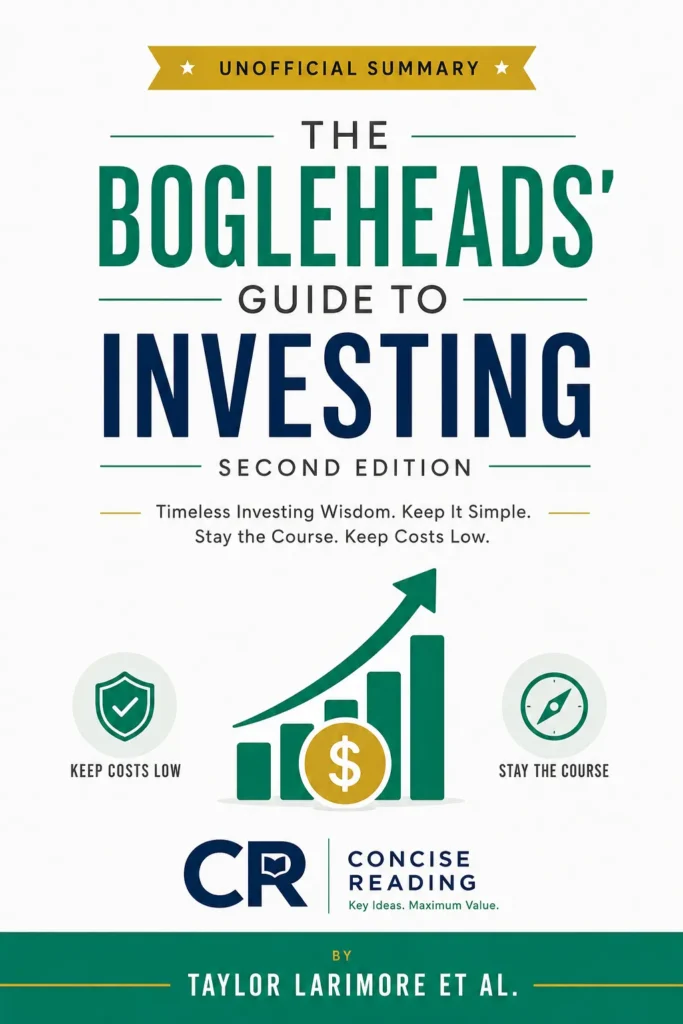
- The Bogleheads’ Guide to Investing — Taylor Larimore, Mel Lindauer & Michael LeBoeuf
- Why it’s here: Bogle’s philosophy made practical. Asset allocation, tax efficiency, retirement planning — this is where theory becomes a system you can run in a weekend.
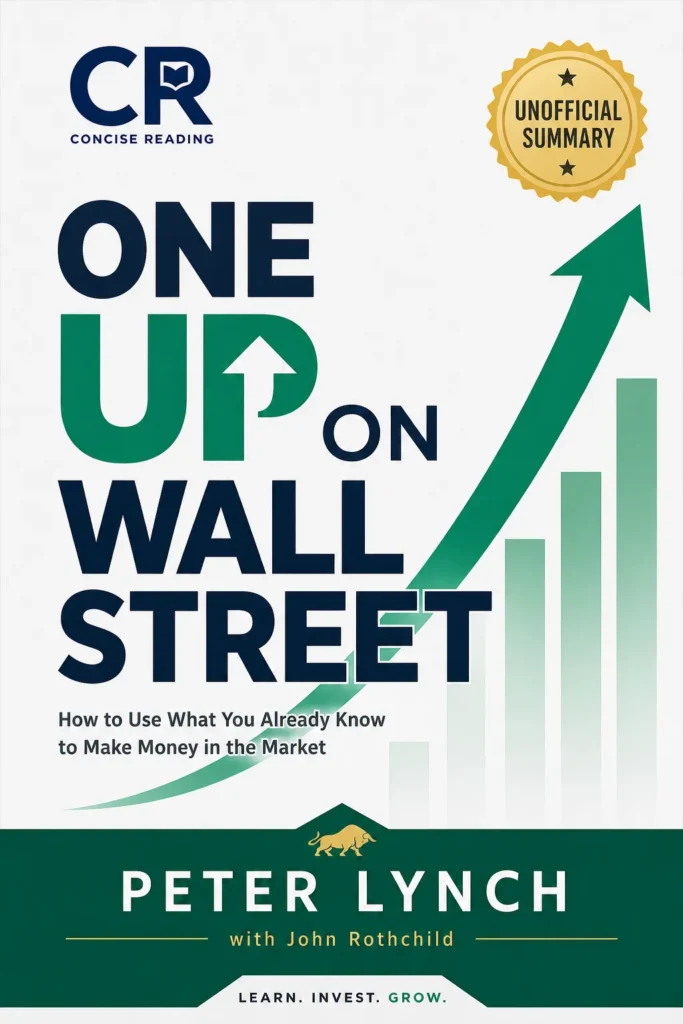
- One Up on Wall Street — Peter Lynch
- Why it’s here: The best argument for intelligent individual stock picking. Lynch’s “invest in what you know” framework is more rigorous than it sounds. Read after the index fund case to understand when active selection is defensible.
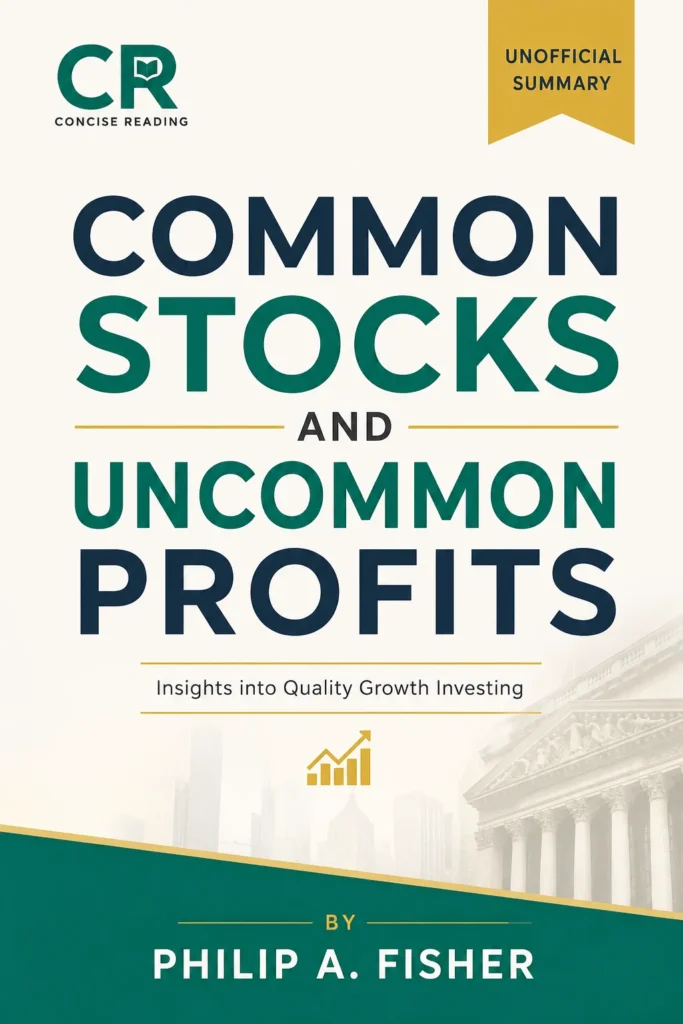
- Common Stocks and Uncommon Profits — Philip A. Fisher
- Why it’s here: The growth investing philosophy that shaped Warren Buffett. Fisher’s 15-point checklist for evaluating a business is one of the most underused frameworks in retail investing.
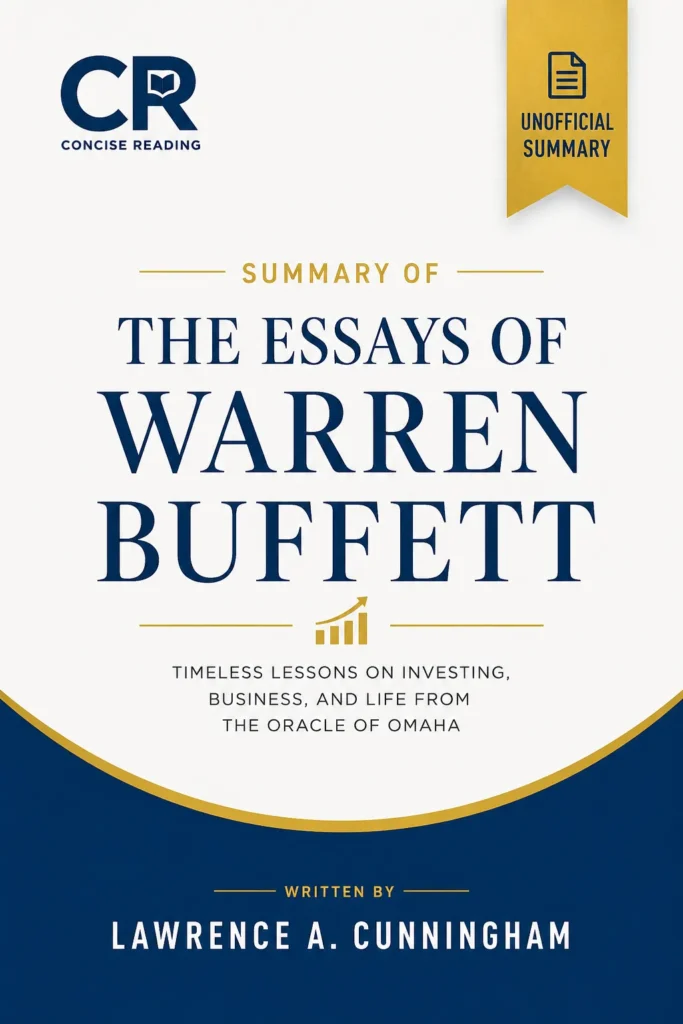
- The Essays of Warren Buffett — Warren Buffett (compiled by Lawrence Cunningham)
- Why it’s here: Primary source. No interpretation, no paraphrase — Buffett’s own thinking on business valuation, management quality, and capital allocation. The most honest window into how the world’s greatest investor actually thinks.
- The Warren Buffett Way — Robert G. Hagstrom
- Why it’s here: Translates Buffett’s philosophy into a replicable analytical framework. Where the Essays are principle, this is process.
- Beating the Street — Peter Lynch
- Why it’s here: Lynch’s sequel, written after managing the world’s most successful mutual fund. Where One Up is philosophy, this is methodology — how he actually researched and selected stocks at Fidelity.
- Stocks for the Long Run — Jeremy J. Siegel
- Why it’s here: The empirical case for equity ownership over every other asset class across 200 years of market history. Provides the historical confidence to hold through volatility.
- The Intelligent Asset Allocator — William Bernstein
- Why it’s here: The most rigorous framework for portfolio construction in the entire pack. Read this last — it synthesizes everything into a practical allocation model.
Suggested Reading Order
Start with The Intelligent Investor (mental foundation), then The Psychology of Money (behavioural layer), then A Random Walk Down Wall Street and The Little Book of Common Sense Investing back-to-back (the passive case), then The Bogleheads’ Guide (practical application), then One Up on Wall Street and Common Stocks and Uncommon Profits (the active counterargument), then The Essays of Warren Buffett and The Warren Buffett Way in sequence (value investing in depth), then Beating the Street (Lynch’s process), then Stocks for the Long Run (historical confidence), and finally The Intelligent Asset Allocator (portfolio synthesis).
What Each Summary Includes
For every summary in this pack, the reader gets:
- Book snapshot & author background
- Full chapter-by-chapter breakdown
- Key frameworks with visual diagrams
- specific action steps
- Critical honest analysis
- One-page cheat sheet
- Further reading recommendations
What You’ll Be Able To Do After This Pack
- Evaluate any stock using Graham’s margin of safety framework and Buffett’s business quality checklist — not guesswork, a repeatable analytical process
- Build and maintain a low-cost index portfolio using the Bogle-Bernstein framework, with the right asset allocation for your age, risk tolerance, and timeline
- Understand why you make bad financial decisions — and use Housel’s behavioural frameworks to override the instincts that cost most investors money
- Explain the active vs passive debate with the actual data — and know precisely when index investing wins and when disciplined stock-picking can outperform
- Read a company’s competitive position using Fisher’s 15-point scuttlebutt method and Lynch’s “invest in what you know” filter
- Hold your positions through market volatility with Siegel’s 200-year data on why equities recover and why panic selling is almost always wrong
- Construct a complete personal investment policy — asset classes, rebalancing schedule, tax strategy, contribution system — the kind of written plan most retail investors never build
Summaries vs Reading the Original Books
- Time required: 15 original books [4–6 months of serious reading] & This pack [8–12 hours total]
- Cost: 15 original books [$180–$220 (retail)] & This pack [$29]
- Structure: 15 original books [12 separate, unconnected reading experiences] & This pack [One curated pack with a guided reading order]
- Retention: 15 original books [Most forgotten within weeks] & This pack [Chapter-by-chapter breakdowns you can revisit in minutes]
- Actionability: 15 original books [Passive reading — frameworks buried in narrative] & This pack [Extracted frameworks with clear action steps]
- Cross-book synthesis: 15 original books [You have to do it yourself] & This pack [Done for you — contradictions surfaced, connections drawn]
The original books are brilliant. This pack extracts everything that matters and shows you what to do with it.
Who This Pack is For ?
This is for you if:
- You’re serious about investing but haven’t yet read the classics — and you want the complete intellectual foundation before putting real money to work
- You’ve read one or two of these books but feel like you’re missing half the picture — the index fund debate, the behavioural layer, the portfolio construction framework
- You’re an entrepreneur or professional who understands that building wealth matters but can’t afford to spend six months working through twelve separate books
- You want to be able to hold an intelligent conversation about value investing, index funds, and asset allocation — not to impress people, but because you know that understanding what you’re doing with your money is not optional
- You’ve been investing by instinct or by following tips, and you want to replace that with a real system built on the thinking of Graham, Buffett, Bogle, Lynch, and Bernstein
If you’re looking for trading strategies, technical analysis, or get-rich-quick systems, this is not that pack. This is for investors who want to build wealth the way the greatest investors in history actually built it: slowly, intelligently, and with a framework that works across decades.
Testimonials
This pack was released recently, so the reviews are still coming in. If you’ve worked through it, scroll down and leave a comment — which summary hit hardest, which framework you’ve already applied, and whether the reading order worked for you. Reader experience is genuinely useful here: it helps others understand what they’re getting, and it helps us make the next pack better. We read every comment.
FAQs
- Q: What format is this? → PDF, readable on any device, instantly downloadable.
- Q: How long are the summaries? → 25–35 pages each with full frameworks and cheat sheets.
- Q: Is this the same as Blinkist? → No. Blinkist gives 8-page overviews. These are 25+ page actionable deep-dives with frameworks, critiques, and cheat sheets.
- Q: Do I need to have read the books? → No. Each summary is completely standalone.
- Q: What if I already own some of these books? → You still get the frameworks, cheat sheets, and action steps for every book — including the ones you’ve read. Most buyers say they got more from the summary than the original.
12 deep summaries. $29 total. That’s $2.42 per book — less than a coffee for a complete investing education that most people spend a year trying to piece together.
Every key idea from Graham, Buffett, Lynch, Bogle, Housel, Fisher, Bernstein, Siegel, and Malkiel — structured, sequenced, and ready to apply.
Want more than summaries? The Investing Playbook synthesizes the ten most important investing books into one complete, actionable wealth-building system — frameworks, decision trees, and a step-by-step investing process in a single guide.