The Real Estate Investing Playbook: How to Analyze Deals, Finance Smart, Generate Rental Income & Build a Portfolio That Works Without You
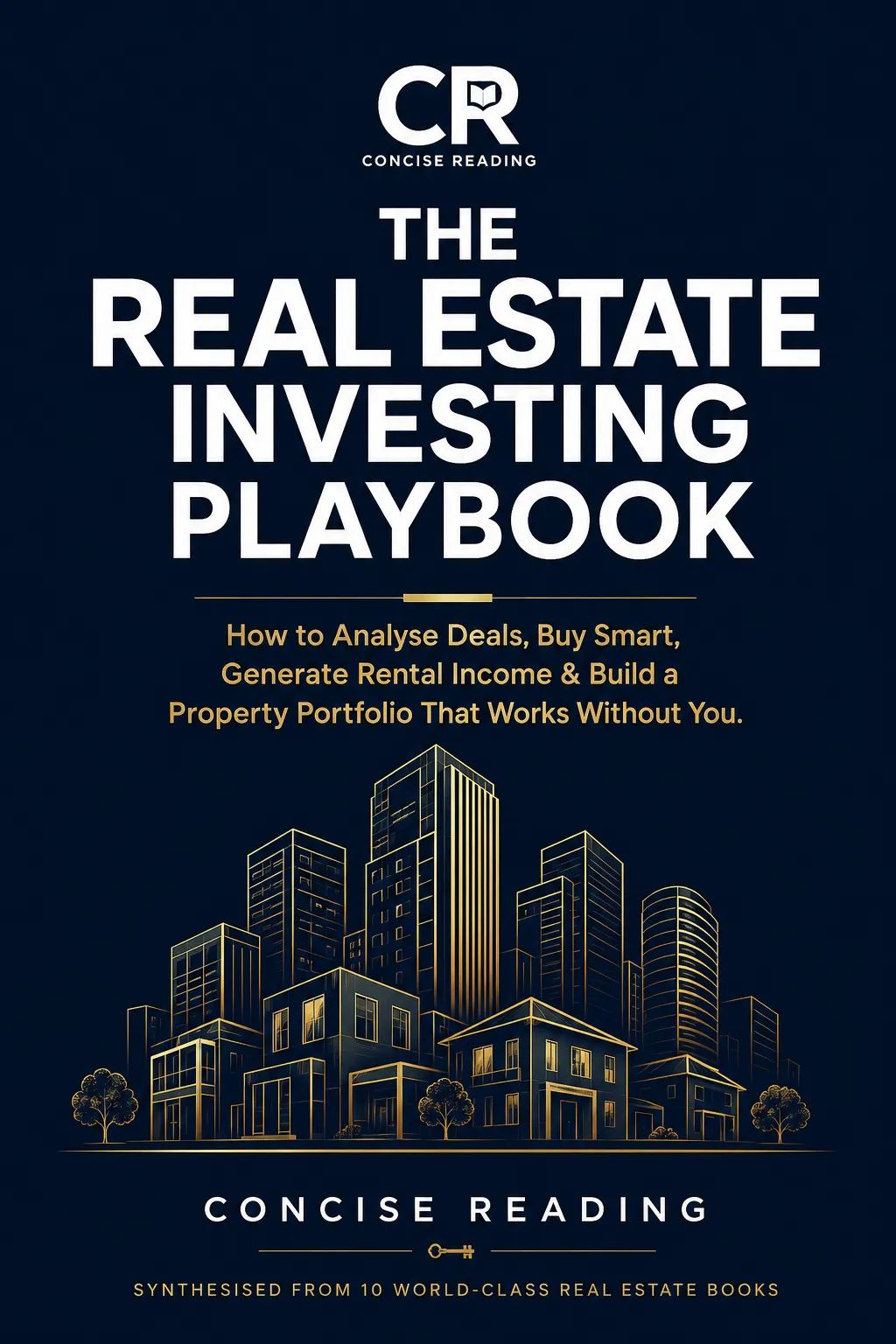
Kiyosaki. Brandon Turner. David Greene. Frank Gallinelli. Gary Keller. Ken McElroy. — 10 of the most influential real estate investing books ever written, synthesized into one complete, chapter-by-chapter system you can start implementing this weekend.
- 10 books synthesized
- 143 pages
- 6 complete frameworks
- 1 master execution plan
- Instant download
- PDF + printable formats
The Problem — Agitate Before You Solve
You already know real estate builds wealth. That is not the problem. The problem is that you have been circling the same airport for months — maybe years — reading, listening, getting motivated, then getting overwhelmed, then putting it off until you know more. And the cycle repeats.
Here is what that loop actually looks like: You read Rich Dad Poor Dad and it changed how you think about money — but it did not tell you how to evaluate a specific deal in a specific city. You watched BRRRR videos on YouTube and it sounded powerful — but nobody explained how to find a contractor you can trust, what lenders actually look for in a cash-out refinance, or what happens when the numbers do not work out. You looked at listings in three different markets and could not decide which one to target — because you do not have a repeatable evaluation process, only a general sense that some cities are “better for investing.”
The problem is not that good information does not exist — 10 brilliant books cover everything you need to know about real estate investing. The problem is that none of them tells you how to use them all together. Kiyosaki gives you the mindset. Turner gives you the operations. Greene gives you the scale strategy. Gallinelli gives you the numbers. But you are left doing the synthesis yourself — which is exactly what you have been trying to do for the past year. This Playbook does that synthesis for you and gives you the system all 10 books collectively point to, sequenced in the order you actually need it.
What is a Playbook ?
What Makes a Concise Reading Playbook Different From Everything Else
A Concise Reading Playbook is not a collection of separate summaries sitting next to each other. It is one unified guide — written by us, powered by insights from 10 books — that takes you from the core problem to a complete, executable system. Every chapter synthesises multiple books around one specific challenge you face as a real estate investor. The result is a single guide that replaces 10 books — not just summarises them. By the final page, you do not have more information. You have a system.
If you want to understand exactly how this compares to the other formats we offer, here is the honest breakdown:
Comparison
| Free Summary | Premium Pack | This Playbook | |
|---|---|---|---|
| Book Insights | Single Book(15–25 pp) | Multiple Books | 10 Books |
| Synthesis Across Books | No | Partial | Full |
| Unified System | No | No | Yes |
| Chapter-by-Chapter Application | No | Partial | Yes |
| 6-Week Master Action Plan | No | No | Yes |
| Master Reference Sheet | No | No | Yes |
| Price | Free | $27 – $37 | $37 |
If you want to go deep on one specific book — say, The Book on Rental Property Investing or Rich Dad Poor Dad — our individual premium summaries are the right format at $4.99 each. If you want all 11 real estate titles in summarized form, the Real Estate Investing Pack gives you that for $27. But if you want one system you can execute — this is the format built for that.
Table of Contents — Full Chapter Breakdown
Here is the logic before the list. Most real estate books fail the reader because they give strategies before establishing the mental framework to use them. You learn how to find deals before you know what a good deal looks like. You learn about BRRRR before you understand cash flow. This Playbook runs in a different order.
Chapter 1 establishes why you are thinking about money incorrectly and must stop before anything else can work. Chapter 2 shows you where to invest before asking you to invest anything. Chapter 3 teaches you to read the numbers so you can stop guessing. Chapter 4 solves the money problem — the biggest objection most new investors face. Chapter 5 gives you the full acquisition-to-management operating system. Chapter 6 introduces the wealth acceleration engine — how to recycle capital and scale. Chapter 7 brings the entire system together into a portfolio architecture that runs without your constant presence.
Each chapter’s answer makes the next chapter’s question more urgent. By Chapter 3, you will be asking “but where do I get the money?” — and Chapter 4 answers exactly that.
Chapter 1: How to Stop Thinking Like an Employee and Start Thinking Like an Asset Owner The mindset shift that makes every other chapter work. Books drawn from: Rich Dad Poor Dad (Robert T. Kiyosaki) | Cashflow Quadrant (Robert T. Kiyosaki) | Rich Dad’s Guide to Investing (Robert T. Kiyosaki)
Bridge to Chapter 2: Once you accept that assets — not income — build wealth, the immediate question becomes: which assets, and where?
Chapter 2: How to Identify the Right Market Before You Ever Look at a Single Property Pick the wrong city and even a perfect deal will underperform. Pick the right market and mediocre deals still work. Books drawn from: The ABCs of Real Estate Investing (Ken McElroy) | The Millionaire Real Estate Investor (Gary Keller) | Long-Distance Real Estate Investing (David Greene)
Bridge to Chapter 3: Now that you know where to invest, you need to know how to evaluate what you find there — because not every property in a good market is a good investment.
Chapter 3: How to Analyse Any Deal in 30 Minutes and Know Immediately If It’s Worth Pursuing The numbers framework — cap rate, NOI, cash-on-cash return, IRR — explained in plain language with a repeatable decision system. Books drawn from: What Every Real Estate Investor Needs to Know About Cash Flow (Frank Gallinelli) | The Book on Rental Property Investing (Brandon Turner) | The ABCs of Real Estate Investing (Ken McElroy)
Bridge to Chapter 4: You can now identify a good deal. The next problem most investors hit immediately: “I don’t have enough money to buy it.” Chapter 4 dismantles that objection completely.
Chapter 4: How to Finance Your First (or Next) Property When You Think You Don’t Have Enough Money Conventional mortgages, seller financing, private money, partnerships, and the creative structures that make real estate accessible at every income level. Books drawn from: The Book on Investing in Real Estate with No (and Low) Money Down (Brandon Turner) | Buy, Rehab, Rent, Refinance, Repeat (David Greene) | Rich Dad’s Guide to Investing (Robert T. Kiyosaki)
Bridge to Chapter 5: You have a market, a deal, and a financing plan. Now you need the operational system — how to acquire, rehab if necessary, and manage the asset so it actually performs.
Chapter 5: How to Acquire, Manage, and Optimise a Rental Property So It Generates Cash Flow From Day One The full operational blueprint — from offer to lease to monthly management — including when to self-manage and when to hand it to a property manager. Books drawn from: The Book on Rental Property Investing (Brandon Turner) | The ABCs of Real Estate Investing (Ken McElroy) | The Millionaire Real Estate Investor (Gary Keller)
Bridge to Chapter 6: Your first property is running. Now the most important strategic question in real estate emerges: how do you buy the next one without waiting another decade to save up?
Chapter 6: How to Use the BRRRR Method to Recycle Your Capital and Buy Multiple Properties With the Same Money The wealth acceleration engine — Buy, Rehab, Rent, Refinance, Repeat — and how to use it to build a portfolio faster than conventional investing allows. Books drawn from: Buy, Rehab, Rent, Refinance, Repeat (David Greene) | The Book on Investing in Real Estate with No (and Low) Money Down (Brandon Turner) | What Every Real Estate Investor Needs to Know About Cash Flow (Frank Gallinelli)
Bridge to Chapter 7: You now know how to scale. But scaling without systems creates chaos, not freedom. Chapter 7 shows you how to build the portfolio architecture that runs without you.
Chapter 7: How to Build a Self-Managing Property Portfolio That Generates Income Without Requiring Your Daily Involvement The portfolio architecture chapter — teams, systems, remote management, and the investor identity shift from operator to owner. Books drawn from: Long-Distance Real Estate Investing (David Greene) | The Millionaire Real Estate Investor (Gary Keller) | Cashflow Quadrant (Robert T. Kiyosaki) | Rich Dad’s Guide to Investing (Robert T. Kiyosaki)
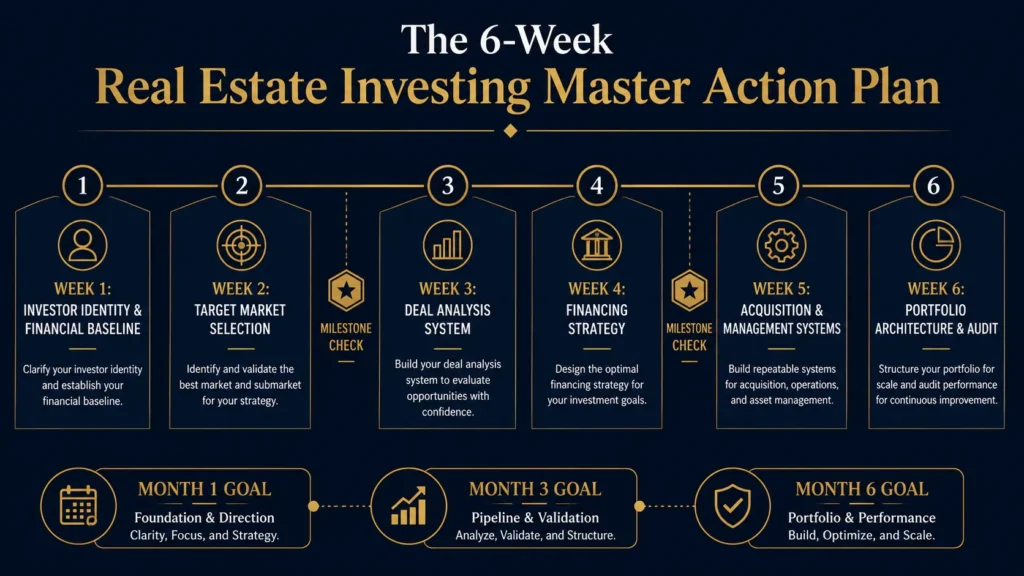
The Master Action Plan
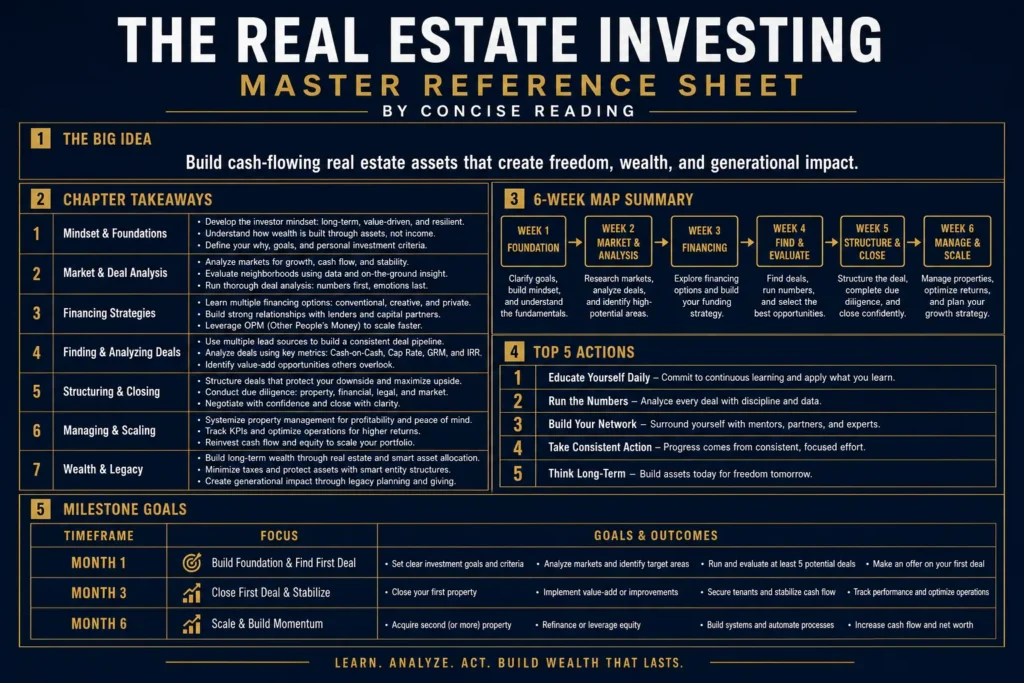
Master Reference Sheet
Books Behind This Playbook
The 10 Books That Power This System — And What Each One Contributes
Every book in this Playbook was selected because it contributes something the other nine do not. This is not a list of popular titles. It is a curated architecture.
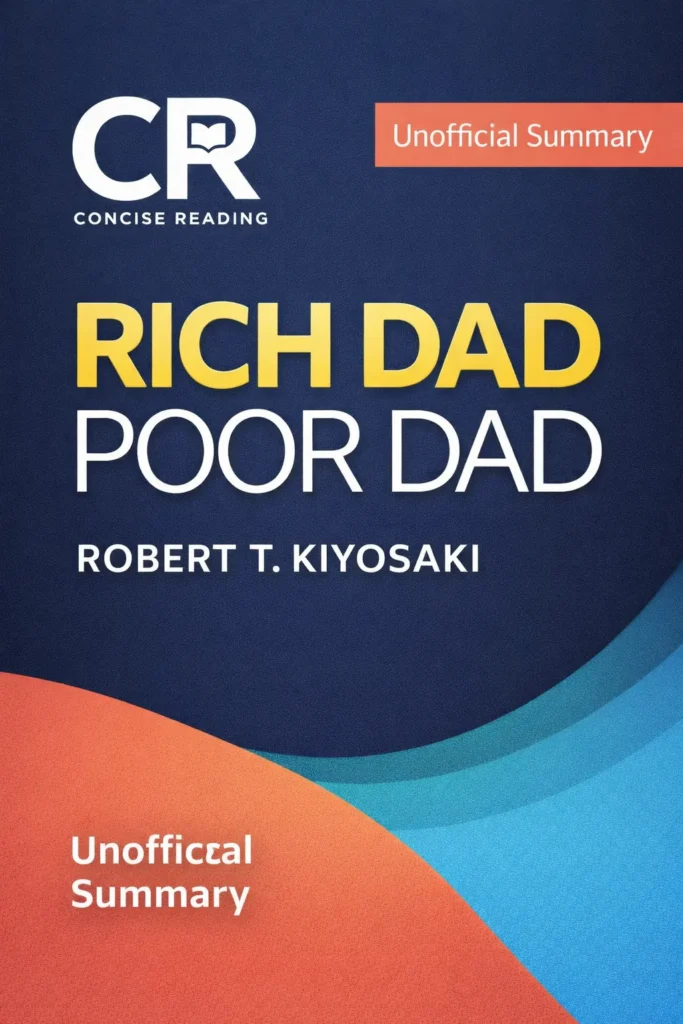
- Rich Dad Poor Dad — Robert T. Kiyosaki
- Reframes the fundamental question of wealth: why your salary is the least efficient wealth-building tool available to you, and why assets — not income — are what build financial freedom. The mindset foundation without which no strategy in this Playbook will make sense. Read our Rich Dad Poor Dad summary for the key frameworks.
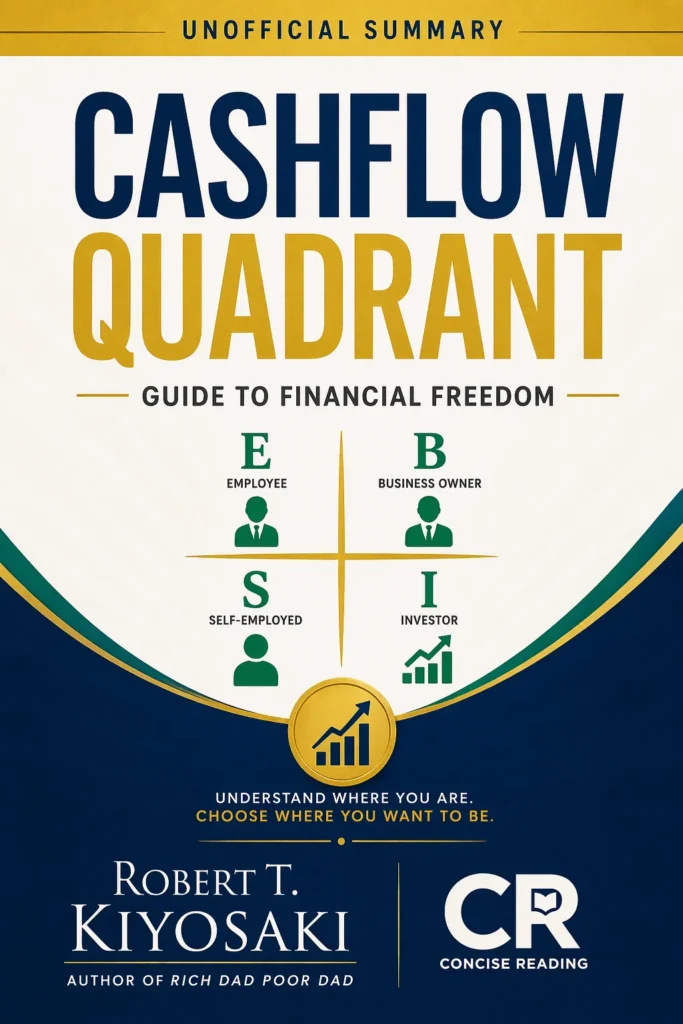
- Cashflow Quadrant — Robert T. Kiyosaki
- Maps the four types of income earners — Employee, Self-Employed, Business Owner, Investor — and shows why the path from the left side to the right side runs directly through asset ownership. This book defines the investor identity this Playbook is building you toward. Explore our Cashflow Quadrant summary.
- Rich Dad’s Guide to Investing — Robert T. Kiyosaki
- Bridges mindset and strategy — how sophisticated investors think about risk, return, and building investment systems rather than making isolated purchases. The third layer of Kiyosaki’s framework that most readers never reach. See our Rich Dad’s Guide to Investing summary.
- The Millionaire Real Estate Investor — Gary Keller
- Provides the full investor blueprint: the models, the metrics, and the mindset of investors who have crossed the $1M net worth threshold through real estate. This book contributes the portfolio scaling architecture that Chapter 7 is built on. Read our Millionaire Real Estate Investor summary.
- The Book on Rental Property Investing — Brandon Turner
- The operational backbone of this Playbook — how to find, analyse, finance, and manage rental properties that produce consistent monthly cash flow. Turner’s tactical depth is unmatched in residential real estate. See our Book on Rental Property Investing summary.
- Buy, Rehab, Rent, Refinance, Repeat — David Greene
- Introduces the BRRRR method as a capital recycling engine — the strategy that allows you to build a portfolio without permanently tying up your capital in each property. The single most powerful wealth acceleration framework in residential real estate. Explore our BRRRR summary.
- The ABCs of Real Estate Investing — Ken McElroy
- Grounds the entire Playbook in commercial real estate fundamentals — market evaluation, deal structure, and property management at scale. McElroy’s market analysis framework is the foundation of Chapter 2. Read our ABCs of Real Estate Investing summary.
- What Every Real Estate Investor Needs to Know About Cash Flow — Frank Gallinelli
- The quantitative backbone of this Playbook. Every metric that matters — cap rate, NOI, IRR, cash-on-cash return — explained with the rigour of a finance professional and the clarity of an educator. Chapter 3 would not exist without this book. See our Cash Flow summary.
- The Book on Investing in Real Estate with No (and Low) Money Down — Brandon Turner
- Expands the financing conversation beyond conventional mortgages — seller financing, partnerships, private money, and creative structures that make real estate entry accessible regardless of your current capital position. The financing chapter is built on this book’s framework. Explore our No Money Down summary.
- Long-Distance Real Estate Investing — David Greene
- Destroys the myth that you must invest locally — and provides the specific systems, team structures, and management tools to invest profitably in any market in the country from anywhere. This book unlocks your target market from a geography of 1 to a geography of 300+ cities. Read our Long-Distance Real Estate Investing summary.
All 11 real estate titles in our library — including one additional title not in this Playbook — are available individually as premium summaries or as a complete collection in the Real Estate Investing Pack.
Specific Outcomes — What You’ll Be Able To Do
These are not vague promises. They are the specific capabilities you will have built by the final page of this Playbook.
You will be able to hand a complete, documented investment system — market selection data, deal analysis spreadsheet, financing map, team contacts, and portfolio plan — to a partner, spouse, or accountant and have them understand exactly what you are building and why.
You will be able to evaluate any real estate market — local or long-distance — using a repeatable, data-driven scoring system that measures population growth, job diversity, landlord-friendly legislation, price-to-rent ratios, and vacancy rates, so your market decision is driven by evidence rather than instinct or proximity.
You will be able to analyse any residential deal in under 30 minutes using a spreadsheet you build in Week 3 — calculating cap rate, net operating income, cash-on-cash return, and monthly cash flow — and give yourself a clear, unemotional pass or fail verdict on every property you evaluate.
You will be able to identify which financing strategy is available to you right now — based on your actual credit score, liquid capital, and income situation — and describe your primary and backup financing paths before you make a single offer.
You will be able to explain the BRRRR method (Buy, Rehab, Rent, Refinance, Repeat) and apply its eligibility checklist to any property to determine whether it qualifies as a capital-recycling deal — so you stop trading cash for equity and start building a portfolio with the same money used repeatedly.
You will be able to build an acquisition team in any market — investor-focused agent, inspector, attorney, accountant, and property manager — using a documented process that does not depend on personal connections or local knowledge.
You will be able to structure a property management system for any rental property — with a clear, written decision rule for when to self-manage and when to hire — so that your portfolio’s operational demands do not grow faster than your time allows.
You will be able to design a 3-year portfolio architecture with specific unit targets, income milestones, and financing strategies at each stage — so that every subsequent property decision is evaluated against a long-term plan rather than made in isolation.
You will be able to run a monthly portfolio review in under 30 minutes per property — tracking actual rent collected, vacancy days, maintenance costs versus reserve, and cash-on-cash return — so your portfolio is monitored like a business, not managed reactively.
You will be able to articulate exactly where you sit in Kiyosaki’s Cashflow Quadrant right now, what it would take to move income from the left side (Employee / Self-Employed) to the right side (Business Owner / Investor), and which specific actions in your 6-week plan move you in that direction.
Pricing
What it would cost otherwise
$ 150 +
- 10 original books at Avg. $15 each
- Plus months of reading time
- Plus no synthesis
- Plus no action plan
This Playbook
$ 37
- One-time. Yours forever.
- All 10 books synthesized
- 6 original frameworks
- Master 6-week action plan
- Instant PDF download
Instant download · PDF & printable · Use on any device · One-time payment
Testimonials
Have You Read The Real Estate Investing Playbook?
This Playbook was built to be used, not shelved. If you have worked through the chapters, completed a Chapter Action Plan, run your first deal analysis, or started Week 1 of the Master Action Plan — we want to hear what happened.
Scroll to the comments below and share your experience: which chapter landed hardest, what action you took first, or what changed in how you think about property investing. Your feedback helps other readers know what to expect — and it tells us what to build next.
If you have questions about anything in the Playbook, the comments section is the right place. We read everything. You can also reach us directly through the Contact page.
FAQs
- Q: What makes this different from your premium packs? → A pack is 10-15 individual summaries on the same topic. The playbook is one unified guide that synthesizes all of them into a complete system with a master action plan. Think of the pack as individual songs and the playbook as the album — one coherent journey.
- Q: Do I need to read the original books first? → No. The playbook is completely standalone.
- Q: How is this different from Blinkist? → Blinkist gives you short summaries of individual books. This playbook does not summarize books — it synthesizes them. Every chapter uses 2–4 books to answer one specific question you face. The result is an original system, not a summary service.
- Q: How long will it take to read? → The full playbook is designed to be read in one weekend and implemented over 6 weeks using the Master Action Plan.
- Q: What format? → PDF. Readable on any device. Designed for printing if preferred.
10 of the world’s best real estate investing books, synthesised into one system you can start using this weekend. The Master Action Plan gives you your first 6 weeks of implementation — day by day, action by action, with done-when criteria for every task so you always know exactly where you stand.
The books exist. The frameworks exist. The strategies exist. What most investors lack is the system that connects all of it into a sequence they can actually follow. That is what this Playbook is.
Everything else is up to you.